Face Styles
|
You may have heard there are common face shapes and that certain frame styles go with each face shape. The truth is that nobody really has just one face shape we are all a little different and often have a mix of the so called face shapes. That all said the basic rules are a good guide to get you started but don't be put off trying on something thing just because someone said you can't have a round frame with a round face!
The Basic rule to get you started is choose a frame shape that is the opposite to your face shape! |
Square
|
Round
|
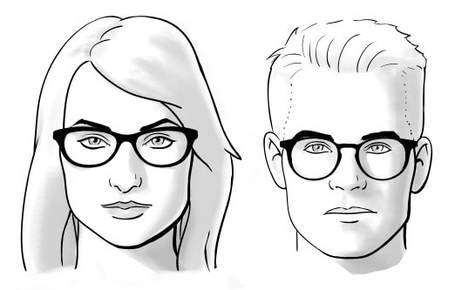
Square faces have strong, well-defined angles in the forehead, jaw and cheeks.
The Square Face RuleRound Frames , oval frames, or a cat-eye are frames that follow the rule.
For a square face the goal should be to lengthen and soften the face by adding curving lines. You can also make a square face appear thinner and softer by selecting glasses that are wider than they are deep, giving the illusion of a slimmer face. |
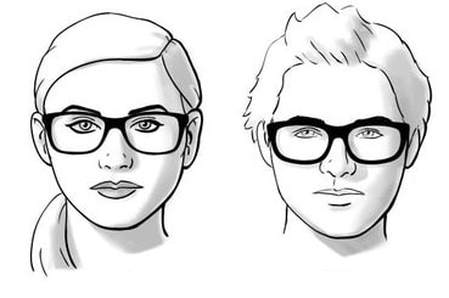
Round faces are defined by a soft, circular shape the width and length are nearly equal.
The Round Face RuleFrames that are wider than they are tall, with a clear or thin bridge follow the round face rule.
For round face the goal should be to add contrast to the face's natural curves and to avoid frames that exaggerate the roundness of the face. |
Heart or Triangle
|
Oval
|
|
|
|
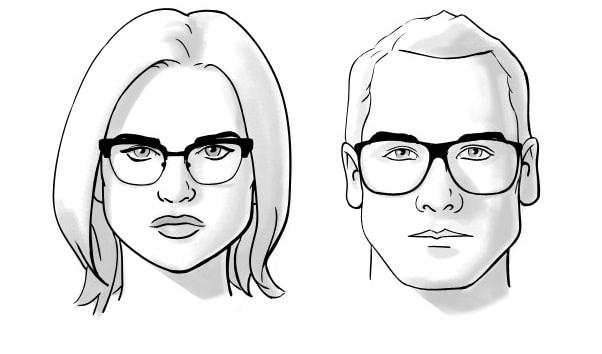
Heart or Triangle faces are defined by the broader forehead and narrower chin and jaw.
The Heart or Triangle Face Rule
Frames that are wide on the bottom work are best choice if you want to follow the rule.
The goal here is to balancing out the face shape, hence the wider bottom of the frame. |
Oval face shapes have balanced features and a chin slightly narrower than the forehead.
The Oval Face RuleSquare frames are best choice if you want to follow the rule.
For oval face the goal should be to balance out the longer shape of oval face. |
