Waipapa Eyecare - Optometrists
  • Home
  • About
    • Meet the People
    • OCT - Optical Coherence Tomography
    • Zeiss Visufit 1000
    • 70% Off Replacement Lenses
    • Take a 3D Look around
  • Eye Health
    • Myopia - Nearsightedness
    • Hyperopia - Farsightedness
    • Astigmatism
    • Presbyopia
    • Dry Eye
    • Cataracts
    • Glaucoma
    • Macula Degeneration
    • Flashes and Floaters
    • Retinal Detachment
    • Macula Hole
    • Diabetic Retinopathy
    • Keratoconus
  • Eye Exams
    • Our Eye Exam Standard
    • Contact Lens Exams
    • Eye Exams For Kids
  • About Glasses
    • Frames
    • Frames & Face Shape
    • Lens Designs
    • Lens Options
    • Thinner Lenses
    • Cleaning Your Glasses
  • Contact
  • FAQ
    • Privacy Policy
  • Book Now
    • Become a Client

What Is Presbyopia?

Common age-related vision change

Presbyopia

Presbyopia makes close focusing harder and usually becomes noticeable from around the 40s.

Presbyopia is the normal age-related change where the eyes gradually lose some of their ability to focus clearly up close.

It can make reading, phone use, computer work, menus, labels, and other close tasks harder or more tiring.

Book Online Lens Designs
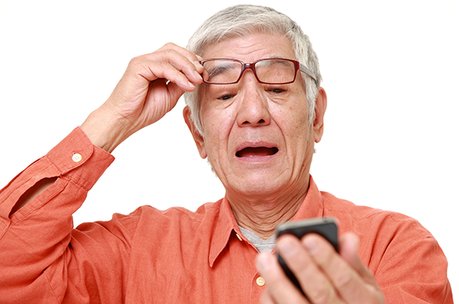
Diagram showing presbyopia and reduced near focusing ability Click image to view full size

What causes presbyopia?

Presbyopia is mainly related to natural changes in the focusing system of the eye.

Lens flexibility

The natural lens inside the eye gradually becomes less flexible with age, making it harder to change focus for near tasks.

Near focusing effort

Close work needs extra focusing effort. As presbyopia develops, that effort becomes harder to maintain comfortably.

Normal age-related change

Presbyopia is not a disease. It is a normal vision change that affects nearly everyone eventually.

Presbyopia is different from hyperopia

Presbyopia is an age-related near focusing change. Hyperopia, or farsightedness, is a separate focusing condition related to the shape and focusing power of the eye. The two can occur together, but they are not the same thing.

Possible signs of presbyopia

Symptoms vary depending on your age, prescription, work, hobbies, and how much close work you do.

Holding things further away

You may find yourself holding books, menus, labels, or your phone further away to make the print clearer.

Tired eyes and headaches

Reading, screen use, or detailed near work may cause eye fatigue, aching eyes, or headaches.

Needing brighter light

Small print may feel easier with better lighting, stronger contrast, or larger text.

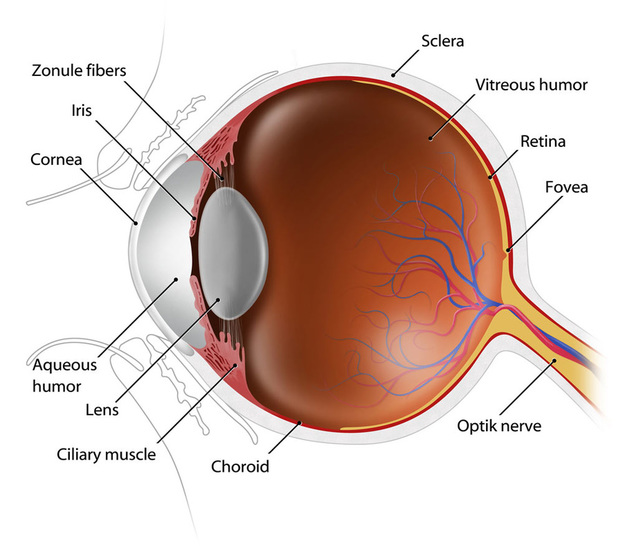
Eye anatomy diagram showing the lens and retina Click image to view full size

How the eye focuses up close

For near vision, the eye needs to change focus so close objects are clear on the retina.

When we are younger, the natural lens inside the eye can change shape more easily. As presbyopia develops, the lens becomes less able to adjust for close work.

Reading glasses, progressive lenses, bifocals, occupational lenses, or contact lens options may help by providing the extra near focus your eyes need.

Do not assume all near blur is just age

Presbyopia is common, but near blur, eye strain, headaches, or changing vision can also be related to other prescription changes, eye coordination, dry eye, medication effects, or eye health conditions.

A full eye exam checks more than just reading focus. It also checks your prescription and eye health.

Read about our eye exam standard

How presbyopia may be corrected

The best option depends on your distance prescription, near tasks, work, hobbies, comfort, and frame choice.

Reading glasses

Reading glasses can be useful for near tasks if your distance vision does not need correction or if you only need help up close.

Progressive lenses

Progressive lenses can provide distance, intermediate, and near focus in one pair of glasses without a visible line.

Read about lens designs

Bifocals or trifocals

Bifocals and trifocals use visible lens segments to provide different focus zones. They may suit some people depending on their visual needs.

Other useful lens options

Some people need more than one pair of glasses to cover different tasks comfortably.

Computer glasses

Computer or occupational lenses can be useful if you spend long periods at a desk, screen, counter, workshop, or other fixed working distance.

Contact lenses

Some contact lens options can help with presbyopia. Suitability depends on your prescription, eye health, comfort, and expectations.

Contact lens exams

Task-specific glasses

Some tasks, such as sewing, music, workshop use, office work, or reading in bed, may work better with a task-specific pair.

Progressive lenses need careful frame choice

Progressive lenses need enough frame depth and accurate measurements to work well. Frame size, fit, lens design, and digital measurements all make a difference.

At Waipapa Eyecare we use digital measurements to help fit modern lenses accurately in the frame you choose.

Read about Zeiss Visufit 1000

Related vision conditions

Presbyopia can occur on its own or alongside other focusing conditions.

Myopia

Myopia, or nearsightedness, usually makes distance vision blurry while close vision is clearer.

Read about myopia

Hyperopia

Hyperopia, or farsightedness, can make close work harder and may also affect distance vision in some cases.

Read about hyperopia

Astigmatism

Astigmatism is caused by uneven focusing power and can cause blur or distortion at different distances.

Read about astigmatism

At what age does presbyopia start?

It commonly becomes noticeable from around the 40s, although the exact timing varies from person to person.

Does presbyopia keep changing?

It usually changes gradually for a number of years before becoming more stable later on.

Can I just use cheap readers?

Ready-made readers may suit some simple near tasks, but they do not check eye health, eye coordination, astigmatism, unequal prescriptions, or distance vision needs.

Are progressive lenses hard to use?

Many people adapt well to progressive lenses, but lens design, frame choice, measurements, prescription, and expectations all matter.

Read about choosing frames

Finding close work harder?

You can book online, phone us, or call in and see us at Waipapa Eyecare.

Monday to Friday: 9am - 5pm
Phone: 09 407 1065
Email: [email protected]
Book Online Contact Us

For urgent eye problems, sudden vision changes, flashes, floaters, eye pain, or injury, please phone us rather than using online booking.

× Large diagram showing presbyopia and reduced near focusing ability

Presbyopia - near focusing becomes harder with age.

× Large eye anatomy diagram showing the lens and retina

How the eye focuses up close.

Become a Client New Client

Waipapa Eyecare

Locally owned, independent optometry care in Waipapa. We provide thorough eye exams, modern diagnostic technology, quality lenses, and practical advice for your vision and eye health.

Book Online Privacy Statement

For urgent eye problems, sudden vision changes, flashes, floaters, eye pain, or injury, please phone us rather than using online booking.

Contact

Phone: 09 407 1065
Email: [email protected]
Hours: Monday to Friday, 9am - 5pm

Shop 8, 12 Klinac Lane
Waipapa, Kerikeri 0230

Quick links

  • Home
  • Our Eye Exam Standard
  • OCT Eye Scans
  • Zeiss Visufit 1000
  • Diamond Plus Offer
  • Privacy Statement
  • Contact Us
© 2021-2026 Waipapa Eyecare. All rights reserved.
Privacy Statement  |  Website content is general information only and does not replace personalised optometry advice.
  • Home
  • About
    • Meet the People
    • OCT - Optical Coherence Tomography
    • Zeiss Visufit 1000
    • 70% Off Replacement Lenses
    • Take a 3D Look around
  • Eye Health
    • Myopia - Nearsightedness
    • Hyperopia - Farsightedness
    • Astigmatism
    • Presbyopia
    • Dry Eye
    • Cataracts
    • Glaucoma
    • Macula Degeneration
    • Flashes and Floaters
    • Retinal Detachment
    • Macula Hole
    • Diabetic Retinopathy
    • Keratoconus
  • Eye Exams
    • Our Eye Exam Standard
    • Contact Lens Exams
    • Eye Exams For Kids
  • About Glasses
    • Frames
    • Frames & Face Shape
    • Lens Designs
    • Lens Options
    • Thinner Lenses
    • Cleaning Your Glasses
  • Contact
  • FAQ
    • Privacy Policy
  • Book Now
    • Become a Client